
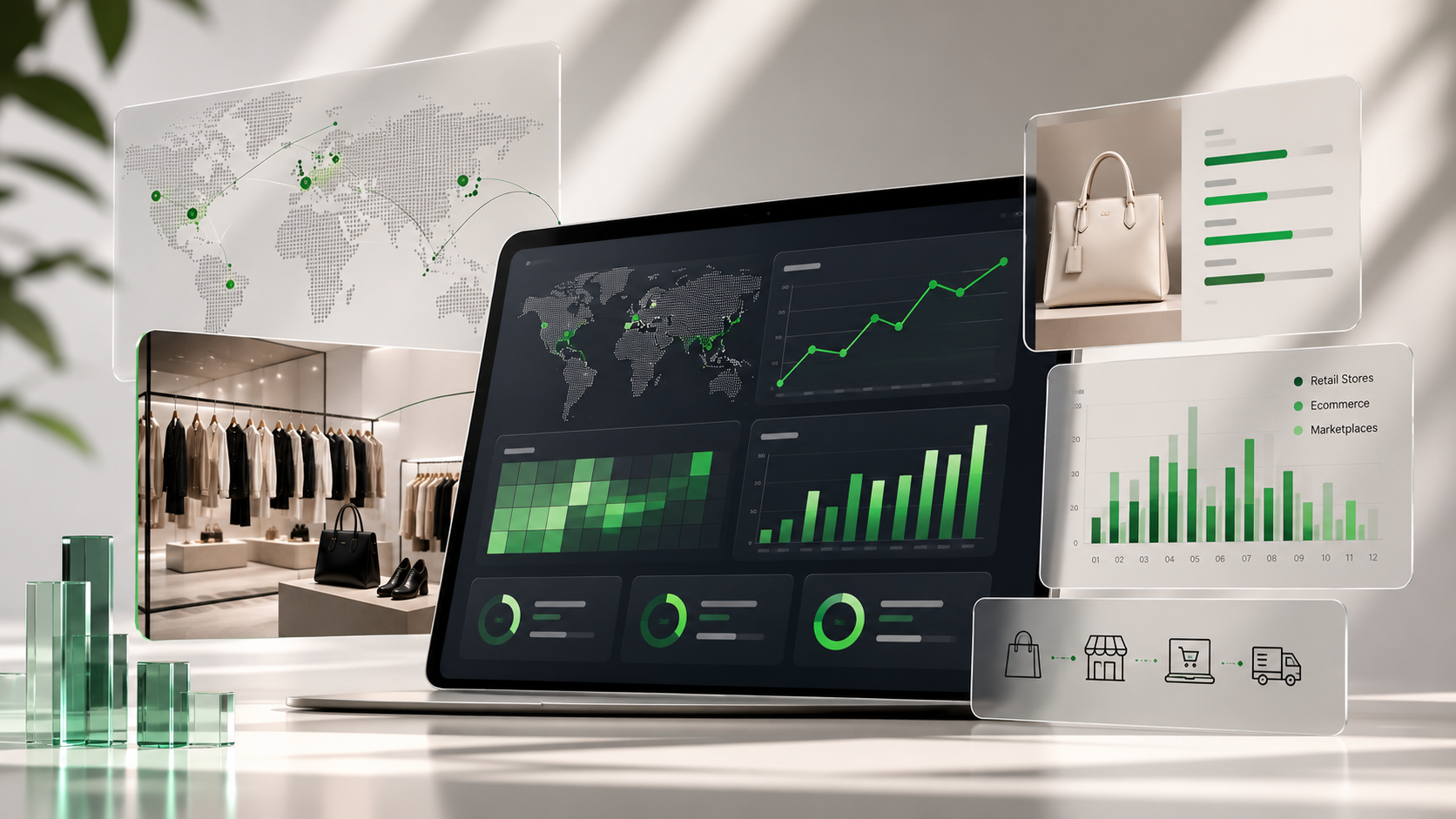
For wholesale brands, performance no longer happens in one place. Products move across retailers, stores, ecommerce channels, marketplaces, and regional networks, and each channel can tell a different part of the story. Omnichannel retail data gives brands the visibility they need to understand that full story rather than relying on disconnected snapshots.
The challenge is that many teams still review performance by channel or retailer in isolation. One report may show ecommerce movement, another may show store sales, and another may show available inventory. When those views are separated, teams can miss the relationships between demand, product availability, and retail execution.
For brands, the value of omnichannel retail data depends on whether it can support decisions across teams. Sales teams need retailer-level context. Planning teams need inventory and sell-through signals. Merchandising teams need product and SKU detail. Leadership needs a reliable view of what is happening across the retail network without waiting for multiple manual recaps.
That is why the strongest retail data programs are built around usability, not just access. Brands do not simply need more reports; they need a clearer way to connect performance signals, compare retailers, and identify where action can improve sell-through, inventory health, and account-level growth.
What Omnichannel Retail Data Really Means
Omnichannel retail data is more than a combined sales report. It brings together performance information from multiple retail environments so teams can compare how products are selling, where inventory is moving, and how demand differs across the business.
For a brand, this may include omnichannel sales data by retailer, store, product, SKU, category, and time period, along with omnichannel inventory data that shows whether the brand is positioned to support future demand. The value comes from seeing these signals in context.
At a practical level, this means the data needs to be organized around the way teams actually work. A useful view should make it possible to compare performance across relevant dimensions such as retailer, store, channel, product, SKU, category, and time period without requiring teams to manually rebuild the same analysis each week.
It also means the platform needs to support consistent definitions. Terms like sales, inventory, sell-through, on hand, weeks of supply, account, or store group can vary across sources. Standardization gives teams the confidence to compare performance without questioning whether the underlying data is aligned.
Why Channel-Specific Reporting Creates Blind Spots
When teams review each channel separately, performance can look simpler than it really is. A product may be gaining traction online but underperforming in select stores. A retailer may appear stable at the topline while specific regions are showing inventory pressure. A category may look healthy in one account but weaker across another.
These blind spots make it harder to prioritize action. Teams may overinvest in products that look strong at a high level or miss opportunities where demand is building but inventory is constrained. A unified view helps teams move beyond averages and understand where the business actually needs attention.
The issue becomes more visible as the business grows. More retailers, more stores, more channels, and more product variation create more places where performance can diverge. A single topline report may show that the business is healthy, while the underlying data reveals gaps by SKU, location, account, or time period.
This is where omnichannel retail data becomes important. Teams need a way to move from surface-level reporting to a more connected view of performance. Without that foundation, important signals can stay hidden until they become more difficult, more expensive, or more urgent to address.
Connecting Sales and Inventory Across Channels
Sales data explains what is moving. Inventory data explains whether the brand can keep supporting that movement. When these two views are connected across channels, brands can identify stock risks, excess inventory, and replenishment opportunities earlier.
For example, strong sell-through with limited on-hand inventory may signal an opportunity to replenish before sales are lost. Slower sales with high inventory may point to allocation issues, merchandising gaps, or the need for promotional support. Omnichannel visibility makes these patterns easier to identify.
Sales data and inventory data are most powerful when they are reviewed together. Sales shows what customers are buying. Inventory shows whether the business can continue meeting that demand. When the two signals are separated, teams can misread performance or react too late.
A stronger data foundation helps teams identify product and account-level patterns earlier. Fast-moving products with limited inventory can be prioritized for replenishment, while slower-moving products with excess stock can be reviewed before markdown pressure increases. This makes omnichannel retail data a direct input into more confident planning decisions.
How Omnichannel Data Supports Better Retailer Conversations
Retailer conversations become more productive when teams can speak with clear evidence. Instead of reviewing isolated reports, brands can discuss where specific products are gaining momentum, where inventory support is needed, and which channels are influencing the broader business.
This level of visibility helps sales, planning, merchandising, and leadership teams align internally before they meet with retail partners. It also helps brands bring more specific recommendations to the table, from replenishment opportunities to assortment planning and product-level performance support.
Better data visibility also changes the quality of retailer conversations. Instead of entering meetings with separate files and partial updates, teams can discuss specific products, stores, channels, and inventory signals with more clarity.
This allows brands to bring more useful recommendations to their retail partners. A team can point to where demand is building, where replenishment may be needed, where product movement is slowing, and where assortment or allocation decisions may need to be reviewed.
The Metrics That Matter in Omnichannel Performance
Omnichannel performance should be evaluated through a combination of metrics, not a single number. Units sold, sales value, inventory on hand, sell-through rate, weeks of supply, store performance, and channel movement all help explain whether demand is healthy and whether inventory is positioned correctly.
The value comes from comparing those metrics across the business. A product may sell quickly online but move more slowly in stores. A retailer may show strong sales but limited inventory coverage. A region may be building momentum while another requires additional support. Omnichannel visibility helps teams see these differences before they are hidden inside a topline average.
How Omnichannel Visibility Supports Faster Action
When teams can see sales and inventory across channels in one consistent view, they can act earlier. Replenishment opportunities can be identified before a product sells out. Excess inventory can be addressed before it becomes a markdown issue. Assortment decisions can be reviewed with more context around how products actually perform by channel and location.
This is especially useful for brands managing multiple retail partners at once. Instead of reviewing each partner separately and trying to connect the story manually, teams can understand where performance is aligned, where it differs, and where action is most likely to create value.
How Different Brand Teams Benefit
Different brand teams use omnichannel retail data in different ways. Sales teams may use it to prepare for retailer meetings and account reviews. Planning teams may use it to monitor inventory health and sell-through. Merchandising teams may use it to understand product, category, size, color, and store-level movement.
Leadership teams need a broader performance view that shows what is happening across the retail network. They need to understand which retailers are driving growth, which products need action, and where inventory or sell-through trends may affect future performance.
When these teams work from disconnected reports, alignment becomes harder. A shared data foundation helps the organization move faster because everyone can start from the same performance story and then apply their own functional expertise.
How to Turn Reporting Into Action
The real value of omnichannel retail data appears when reporting becomes part of a repeatable decision process. Brands should be able to review performance, identify the most important exceptions, align internally, and then bring clear recommendations to retailer conversations.
That process should be practical. If a product has strong sell-through and low inventory, the next step may be replenishment. If inventory is building while sales slow, the next step may be a review of allocation, merchandising, or promotional support. If one retailer is outperforming others, the next step may be to understand what can be applied across the broader network.
The platform should make those next steps easier to identify. It should help teams move from a report to a short list of priorities, so sales, planning, merchandising, and leadership teams can focus on decisions rather than manual analysis.
This is where standardized sales and inventory visibility becomes a performance advantage. Brands can react earlier, prepare stronger account conversations, and manage retail execution with more confidence across the wholesale business.
Common Mistakes to Avoid
One common mistake is assuming that more data automatically creates better decisions. If the data is fragmented, inconsistent, or too difficult to interpret, teams may still spend most of their time preparing reports instead of improving performance.
Another mistake is treating omnichannel retail data as a dashboard project only. Dashboards matter, but they are only useful when the underlying data is clean, standardized, and connected to the questions teams need to answer each week.
Building This Into a Weekly Workflow
To make omnichannel retail data useful, brands should connect it to a regular review cadence. Weekly reporting can help teams identify what changed, which retailers or products need attention, and which actions should be prioritized before the next account conversation.
A repeatable workflow also helps teams measure progress over time. When sales, planning, merchandising, and leadership teams review the same core metrics each week, they can track whether decisions are improving sell-through, reducing risk, and strengthening retail performance.
This also makes performance management more proactive. Instead of waiting for end-of-season recaps, teams can use consistent reporting to spot patterns early and bring more specific recommendations to retailer conversations.
Over time, this rhythm can improve accountability because teams are not only reviewing data; they are returning to the same priorities and measuring whether the agreed actions are making a difference.
What to Look for in a Retail Data Platform
Brands evaluating technology for omnichannel retail data should look beyond the appearance of a dashboard. The most important capabilities are data centralization, retailer standardization, sales and inventory visibility, SKU-level detail, historical trend analysis, and workflows that make insight easier to act on.
It is also important to consider whether the platform supports the realities of wholesale retail. Related needs such as omnichannel sales data, omnichannel inventory data, unified retail data platform require clean data and consistent reporting across accounts. Without that foundation, teams may still spend too much time reconciling files before they can make decisions.
The right platform should help brands reduce manual reporting and improve performance management at the same time. It should make it easier to understand what is selling, where inventory is moving, and which actions should be prioritized.
How SKYPAD Helps Brands Build a Unified View
SKYPAD helps brands centralize and standardize retail sales and inventory data across partners. Instead of relying on separate files, portals, and spreadsheets, teams can access a more consistent view of performance across retailers, stores, products, SKUs, and channels.
With a unified retail data platform, brands can move faster from reporting to action. Teams can identify performance trends, stock risks, and growth opportunities with greater confidence, while reducing the manual work required to pull retail data together.
Because SKYPAD is built around wholesale retail performance, it helps brands move beyond disconnected reporting workflows. Teams can use standardized sales and inventory visibility to understand product movement across retailers, stores, channels, and SKUs with greater confidence.
This gives teams a stronger foundation for daily and weekly decision-making. Whether the priority is improving sell-through, identifying inventory risk, preparing for retailer meetings, or aligning internal teams, SKYPAD helps make retail data easier to use and easier to act on.
Final Thoughts
Omnichannel performance is difficult to manage when data is fragmented. Brands need a clear view of how products are moving across the retail landscape and whether inventory is aligned with demand.
Omnichannel retail data gives teams the foundation to make better decisions across forecasting, replenishment, allocation, assortment, and retailer collaboration. Ready to centralize omnichannel sales and inventory visibility? Request a SKYPAD demo today.
The brands that get the most value from retail data are the ones that turn visibility into repeatable action. Instead of reviewing reports only after the fact, they use performance signals to guide replenishment, assortment, forecasting, allocation, and retailer conversations throughout the season.
For that reason, omnichannel retail data should be treated as a strategic capability, not only a reporting function. When the right data foundation is in place, teams can spend less time preparing files and more time improving performance.