
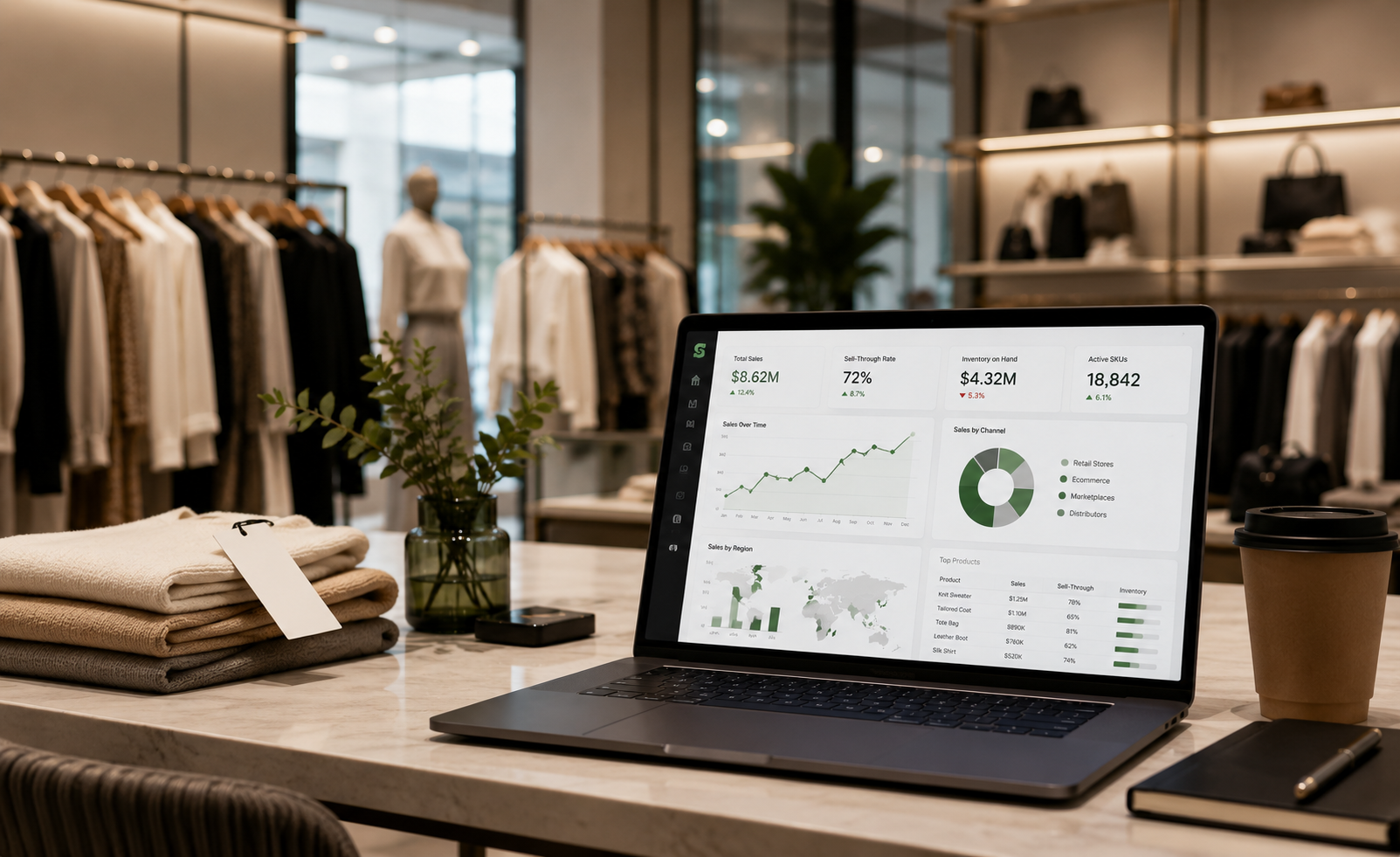
Retail vendor collaboration is becoming more data-driven. Retailers need brand partners who can support smarter assortment decisions, replenishment planning, inventory management, and product performance improvement. Brands need access to the right performance information so they can understand what is working and where action is needed.
For many retailers, the challenge is not whether vendor collaboration matters. The challenge is how to make it scalable. Manual reports, email attachments, and one-off vendor requests can create unnecessary work for internal teams while limiting the value that brand partners can provide.
For retailers, the value of vendor reporting platform is not limited to internal reporting. It also shapes how effectively teams work with vendors, buying groups, planning teams, and leadership. When data sharing is inconsistent or overly manual, even strong vendor relationships can become reactive because everyone is waiting for the next file, the next update, or the next interpretation of performance.
A stronger approach gives retailers a way to turn performance data into a controlled collaboration asset. Instead of treating reporting as an administrative task, retailers can use structured data visibility to help partners understand sales, inventory, and product movement in a way that supports better decisions across the business.
Why Manual Vendor Reporting Limits Collaboration
Manual reporting workflows can slow down collaboration because the focus stays on file preparation instead of decision-making. Retail teams may spend time pulling reports, answering vendor questions, updating spreadsheets, and confirming which version of a report is current.
These workflows can also create inconsistency. Different vendors may receive different levels of detail, different formats, or reports at different times. When the reporting process is fragmented, it becomes harder to create a consistent vendor experience across the business.
The issue becomes more visible as the business grows. More retailers, more stores, more channels, and more product variation create more places where performance can diverge. A single topline report may show that the business is healthy, while the underlying data reveals gaps by SKU, location, account, or time period.
This is where vendor reporting platform becomes important. Teams need a way to move from surface-level reporting to a more connected view of performance. Without that foundation, important signals can stay hidden until they become more difficult, more expensive, or more urgent to address.
The Shift Toward Shared Retail Insights
The future of vendor collaboration is built around shared insights. Instead of treating sales and inventory data as a static file, retailers can provide structured visibility that helps vendors understand performance and support the business more effectively.
A vendor reporting platform can make this shift possible by giving approved brand partners access to relevant performance views while allowing the retailer to maintain control over data distribution and permissions.
The practical value of this approach is that it helps teams prioritize. Not every product, store, account, or vendor issue requires the same level of action. Clearer data makes it easier to identify which opportunities are most urgent and which risks may have the greatest impact on performance.
It also creates a common language across teams. When everyone can work from a more consistent view of vendor reporting platform, decisions become easier to explain, easier to compare, and easier to repeat over time.
What Retailers Gain From Better Vendor Collaboration
When vendors have clearer performance visibility, they can come to meetings with stronger recommendations. They can identify products that need replenishment, stores where inventory may be constrained, categories that are building momentum, or slow-moving items that need support.
This helps retailers move the conversation beyond basic reporting. Instead of asking what happened, teams can focus on what should happen next. That can improve assortment planning, replenishment decisions, and overall vendor accountability.
At a practical level, this means the data needs to be organized around the way teams actually work. A useful view should make it possible to compare performance across relevant dimensions such as retailer, store, channel, product, SKU, category, and time period without requiring teams to manually rebuild the same analysis each week.
It also means the platform needs to support consistent definitions. Terms like sales, inventory, sell-through, on hand, weeks of supply, account, or store group can vary across sources. Standardization gives teams the confidence to compare performance without questioning whether the underlying data is aligned.
Why Access Control Still Matters
Better collaboration does not mean sharing everything. Retail data can be sensitive, and retailers need to remain in control of what each partner can see. A scalable process should allow data to be distributed securely, with vendor-specific access and clear boundaries around what is visible.
This balance is important. Vendors need enough visibility to support performance, but retailers need a governed process that protects the business and avoids uncontrolled file sharing.
The issue becomes more visible as the business grows. More retailers, more stores, more channels, and more product variation create more places where performance can diverge. A single topline report may show that the business is healthy, while the underlying data reveals gaps by SKU, location, account, or time period.
This is where vendor reporting platform becomes important. Teams need a way to move from surface-level reporting to a more connected view of performance. Without that foundation, important signals can stay hidden until they become more difficult, more expensive, or more urgent to address.
What Shared Insights Look Like in Practice
Shared insights do not mean giving every vendor access to every data point. In practice, they mean providing approved visibility into the information that helps a partner support performance. That may include sales trends, inventory levels, product movement, store-level performance, or category-level context depending on the relationship and data policy.
The best shared insight models are structured and repeatable. Vendors know where to access the information, retailers know what has been shared, and both sides can use the same data foundation to discuss opportunities, risks, and next steps.
Why Vendor Reporting Should Become a Strategic Workflow
Vendor reporting is often treated as an administrative output, but it has strategic value when it is connected to business decisions. A strong vendor reporting platform can support better assortment planning, replenishment decisions, promotional alignment, and performance accountability across the vendor base.
As vendor networks grow, the need for a scalable workflow becomes even more important. Retailers need a consistent way to support strategic partners without increasing the manual workload for every new reporting request.
How Different Retail Teams Benefit
Different retail teams use vendor reporting platform in different ways. Buying and merchandising teams may use it to understand product performance and assortment opportunities. Planning teams may use it to evaluate inventory health and replenishment needs. Vendor management teams may use it to create a more consistent partner experience.
Leadership teams need a higher-level view that explains performance without losing the operational detail behind it. A strong reporting foundation should support both strategic summaries and deeper analysis, so teams can move from an executive view into specific product, vendor, or store-level questions when needed.
This cross-functional value is one reason data sharing and reporting systems need to be designed around real workflows. If the platform only serves one team or one reporting need, the retailer may still need separate manual processes to support the rest of the business.
How to Turn Reporting Into Action
The real value of vendor reporting platform appears when reporting becomes part of a repeatable decision process. Retailers should be able to review performance, identify the most important exceptions, align internally, and then bring vendors into the conversation with clear context around what needs attention.
That process should be practical. If a vendor sees strong sales with limited inventory, the next step may be a replenishment or allocation discussion. If a product is slowing across several stores, the next step may be to review visibility, assortment fit, or promotional support. If performance differs widely by location, the next step may be a more focused store or regional analysis.
The platform should make those next steps easier to identify. It should help teams move from a report to a short list of priorities, so vendor conversations can focus on action rather than basic data collection.
This is where secure, structured data sharing can become a competitive advantage. Retailers can maintain control of the data environment while giving vendors enough visibility to support stronger, faster, and more accountable performance management.
Common Mistakes to Avoid
One common mistake is assuming that more reporting automatically creates better collaboration. If the data is difficult to access, inconsistent, or not clearly governed, vendors may still struggle to understand what matters and internal teams may still spend time answering the same questions.
Another mistake is treating vendor reporting platform as a one-time technology project. The process needs to support real operating habits: regular review cadences, approved access rules, consistent definitions, and a clear understanding of how insights should feed into vendor and business decisions.
Building This Into a Weekly Workflow
To make vendor reporting platform useful, retailers should connect it to a regular review cadence. Weekly reporting can help teams identify what changed, which vendors or product groups need attention, and which conversations should happen before small performance issues become larger operational problems.
A repeatable workflow also helps teams measure progress over time. When retailers and vendors revisit the same core metrics each week, they can track whether actions are working, whether inventory positions are improving, and whether collaboration is becoming more effective.
This also makes performance management more proactive. Instead of waiting for quarter-end reviews or urgent vendor escalations, teams can use consistent reporting to identify patterns early and create a clearer rhythm for follow-up.
Over time, this rhythm can improve accountability because teams are not only reviewing data; they are returning to the same priorities and measuring whether the agreed actions are making a difference.
What to Look for in a Retail Data Platform
Retailers evaluating technology for vendor reporting platform should look beyond the surface of the dashboard. The most important capabilities are secure access controls, standardized reporting views, scalable vendor distribution, consistent data definitions, and the ability to reduce manual work for internal teams.
It is also important to consider how the platform supports collaboration. A useful solution should make it easier for vendors to interpret relevant performance data while allowing the retailer to maintain control. Related capabilities such as vendor collaboration, vendor analytics portal, retail data sharing should support the operating model rather than create another reporting silo.
The right platform should help retailers improve efficiency and strengthen partner relationships at the same time. It should not force teams to choose between protecting data and sharing useful insights.
How SKYPAD Supports Retailer-Vendor Collaboration
SKYPAD helps retailers create a more secure and consistent approach to vendor reporting and retail data sharing. Rather than relying on manual file distribution, retailers can provide brand partners with structured access to relevant sales and inventory insights.
For retailers, this can reduce manual reporting work and support a more scalable vendor collaboration model. For brands, it creates clearer visibility into the performance signals they need to make better recommendations.
Because SKYPAD is built around retail sales and inventory visibility, it helps reduce the friction that often exists between data ownership and data collaboration. Retailers can support vendor access while keeping the reporting experience structured, consistent, and aligned to approved data views.
This matters for teams that want to scale vendor reporting without adding operational complexity. Instead of repeating the same manual reporting steps across a growing vendor network, SKYPAD helps create a more controlled and efficient process for distributing performance insights.
Final Thoughts
Vendor collaboration is moving from manual reporting toward shared, action-oriented insights. Retailers that modernize this process can reduce internal workload, improve consistency, and help vendors become stronger performance partners.
A modern vendor analytics portal or vendor reporting platform can help retailers turn data sharing into a more scalable collaboration advantage. Explore SKYPAD retailer solutions to learn more.
The retailers that make the biggest progress are often the ones that treat reporting as part of the vendor operating model, not as a back-office task. When data distribution is secure, consistent, and easy to use, it becomes easier for vendors to support the retailer with more relevant recommendations and faster action.
For that reason, vendor reporting platform should be evaluated by the business outcomes it enables: less manual reporting, better vendor alignment, clearer performance conversations, and stronger control over the retail data environment.