
Before joining SKYPAD, I worked as Global Merchandiser at Devialet, leading the retail deployment of a premium brand across selective distribution.
Devialet is a French maison specializing in high-end sound. Renowned for the power and precision of its speakers, defined by sculptural and minimalist design, the brand speaks to contemporary audiophiles who demand exceptional acoustic performance without compromising aesthetics.
Devialet has expanded from high-end amplifiers into lifestyle audio (Phantom speakers, Mania portable speaker, Gemini earbuds) while strengthening its luxury brand positioning by relentlessly focusing on proprietary technology, distinctive "made-in-France" design, and strategic high-end partnerships, such as with the Opéra de Paris and luxury hotels like Fairmont. They maintain a "tech-first" reputation, treating audio as a luxury art form.
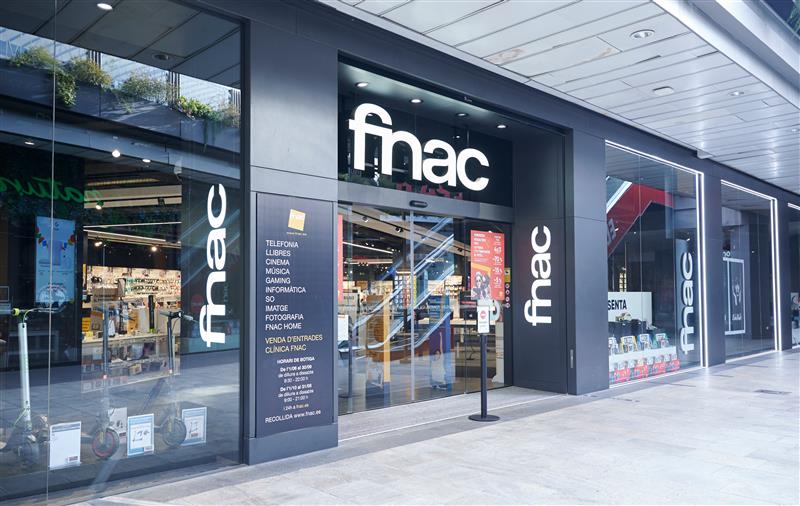
Such positioning makes in-store presentation within selective distribution a strategic imperative, particularly at Fnac, a major electronic retailer in France and across Europe. Historically rooted in culture and now a key player in high-tech, Fnac offers strong visibility in premium urban locations. For an American audience, it may be likened to Best Buy for its technological expertise and to Nordstrom for its premium image and urban footprint. Securing distribution there constitutes a major strategic lever in the French market.
Devialet’s deployment within Fnac was therefore not a matter of simple retail presence, but the implementation of a deliberate strategy aimed at reconciling selective distribution, brand experience, and commercial performance.
1. Selecting strategic points of sale
Rather than pursuing mass deployment, Devialet targeted stores with strong potential and alignment with its DNA: six in Paris (Saint-Lazare, Forum des Halles, Ternes, Montparnasse, La Défense, Parly 2), as well as Bordeaux, Monaco, Nice, Lyon, Lille, Lausanne, and Geneva. The objective was clear: to reach an affluent, international clientele attuned to design and innovation.
2. Recreating a premium experience within a standardized retail environment
The challenge extended beyond shelf presence; it lay in controlling the experience itself.
The response took the form of immersive cabins of approximately 10 square meters, recreating the acoustic conditions and intimacy of the brand’s flagships and directly operated stores.
Dedicated staff, trained by Devialet, ensured full command of the discourse, the storytelling, and the customer experience.
Very few brands benefit from such an installation at Fnac, only Bose or Apple, for instance, positioning Devialet as a signature of distinction within the retailer.
3. Building a win–win partnership
For Fnac, integrating Devialet made it possible to:
- attract a premium clientele;
- increase foot traffic through a spectacular in-store experience;
- energize the high-end audio category.
This example demonstrates that a major retailer can align with a premium brand image, provided that it:
- strategically selects points of sale;
- retains control over the customer experience;
- creates mutual value (through exclusivities, in-store activations, key commercial moments such as Black Friday).
Rather than diluting its image, Devialet used Fnac as a lever for controlled expansion. The brand gained visibility and volume without the capital expenditure required to open and operate these locations directly; meanwhile, the distributor enriched its offering with a strong technological signature.
Yet the brand could have gone even further. At the time, the primary areas for improvement at Devialet concerned performance analysis. The events and activations that proved successful were grounded in sound intuition and a genuine understanding of the clientele. However, drawing clear conclusions, whether from successes or failures was at times difficult, as data collection and exploitation remained complex.
It is precisely at this juncture that SKYPAD could have delivered significant added value, by facilitating access to data and rendering its analysis both simpler and more structured.
Today, mastery of the retail experience no longer resides solely in merchandising. Yesterday, brand control meant owning the space. Today, it also means owning the data. The collection and analysis of in-store data make it possible to objectify performance, optimize activations and product assortment, and steer expansion with greater precision, always in service of brand coherence and long-term value.
------
French Translation
Comment concilier image de marque et distribution chez un retailer ?
Avant de rejoindre SKYPAD, j’ai été Global Merchandiser chez Devialet, directement impliquée dans le déploiement retail d’une marque premium.
Devialet est une maison française spécialisée dans le son haut de gamme. Reconnue pour la puissance et la précision de ses enceintes au design sculptural et minimaliste, la marque s’adresse à des audiophiles contemporains exigeant une qualité sonore exceptionnelle sans compromis esthétique.
Devialet s’est développé des amplificateurs haut de gamme vers l’audio lifestyle (enceintes Phantom, enceinte portable Mania, écouteurs Gemini), tout en renforçant son positionnement de marque de luxe grâce à un accent constant mis sur des technologies brevetées, un design distinctif « made in France » et des partenariats stratégiques haut de gamme, notamment avec l’Opéra de Paris et des hôtels de luxe comme Fairmont. L’entreprise entretient une réputation « tech-first », considérant l’audio comme une forme d’art de luxe.
Un tel positionnement rend stratégique la mise en scène en distribution sélective, notamment à la Fnac. Retailer majeur en France et en Europe, historiquement ancré dans la culture et aujourd’hui incontournable en high-tech, la Fnac offre une visibilité forte dans des emplacements urbains premium. Pour un public américain, on peut la rapprocher de Best Buy pour l’expertise technologique et Nordstrom pour l’image premium et la présence urbaine. Y être distribué constitue un levier stratégique majeur sur le marché français.
Mais comment y parvenir sans altérer l’image de marque ? Le déploiement de Devialet au sein de la Fnac n’était donc pas une simple présence en magasin, mais la mise en œuvre d’une stratégie délibérée visant à concilier distribution sélective, expérience de marque et performance commerciale.
1. Sélectionner des points de vente stratégiques
Plutôt qu’un déploiement massif, Devialet a ciblé des magasins à fort potentiel et cohérents avec son ADN : 6 à Paris (Saint-Lazare, Forum des Halles, Ternes, Montparnasse, La Défense, Parly 2), ainsi que Bordeaux, Monaco, Nice, Lyon, Lille, Lausanne et Genève.
Objectif : toucher une clientèle aisée, internationale et sensible au design et à l’innovation.
2. Recréer une expérience premium en environnement normé
L’enjeu n’était pas seulement la présence en rayon, mais la maîtrise de l’expérience.
La réponse : des cabines immersives d’environ 10 m², recréant les conditions acoustiques et l’intimité des flagships et du retail en propre de la marque.
Un personnel dédié, formé par Devialet, assurait le contrôle du discours, du storytelling et de l’expérience client.
Peu de marques bénéficient d’un tel dispositif à la Fnac (seulement Bose ou Apple), ce qui positionne Devialet comme une signature d’exception au sein du retailer.
3. Construire un partenariat gagnant-gagnant
Pour la Fnac, intégrer Devialet permet :
- d’attirer une clientèle premium ;
- d’augmenter le trafic grâce à une expérience spectaculaire ;
- de dynamiser la catégorie audio haut de gamme.
Cet exemple démontre qu’un retailer majeur peut s’aligner avec une image premium à condition de :
- sélectionner stratégiquement les points de vente ;
- maîtriser l’expérience client ;
- créer de la valeur mutuelle (exclusivités, animations, temps forts commerciaux comme le Black Friday…).
Plutôt que de diluer son image, Devialet a utilisé la Fnac comme levier d’expansion maîtrisée. La marque gagne en visibilité et en volume sans l’investissement que représenterait l’ouverture de ces points de vente en propre ; et le distributeur enrichit son offre avec une signature technologique forte. Mais la marque pourrait aller encore plus loin.
Les axes d’amélioration identifiés à l’époque chez Devialet concernaient principalement l’analyse des performances. Les événements et animations qui fonctionnaient reposaient sur un bon ressenti et une réelle compréhension de la clientèle. En revanche, il était parfois difficile de tirer des conclusions claires, tant des succès que des échecs, car la collecte et l’exploitation des données restaient complexes.
C’est précisément à ce niveau que SKYPAD apporte une véritable valeur ajoutée, en facilitant l’accès aux données et en rendant leur analyse plus simple et plus structurée.
En effet aujourd’hui, la maîtrise de l’expérience retail ne se limite plus au merchandising. Hier, le contrôle passait par l’espace physique. Aujourd’hui, il passe aussi par la data. La collecte et l’analyse de données en point de vente permettent d’objectiver la performance, d’optimiser les activations et l’offre produit ainsi que de piloter plus finement l’expansion, toujours au service de la cohérence et de la valeur de marque.