
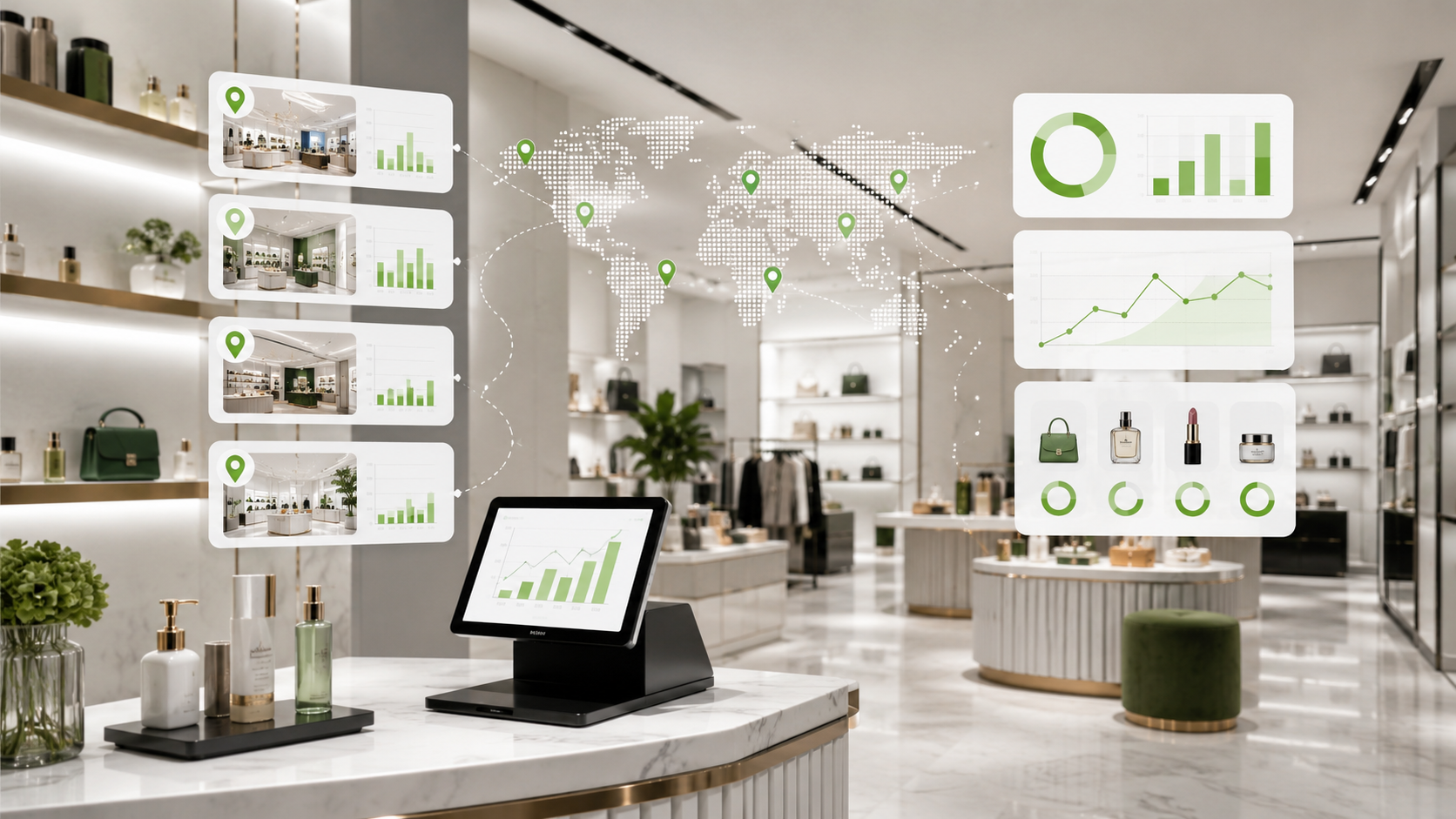
For wholesale brands, understanding retail performance at a high level is useful, but it is rarely enough. Total sales can show whether a product is performing overall, but they do not always explain where that performance is coming from. A product may be selling strongly in certain stores, underperforming in others, or moving differently across regions and channels.
This is where POS data analysis becomes valuable. Point-of-sale data gives brands visibility into what is actually selling to customers at the retail level. When analyzed properly, it can show product movement by store, location, SKU, time period, and retailer, helping brands understand performance with much greater detail.
Store-level POS insights help brands move beyond broad reporting and into more practical decision-making. They can identify where products are gaining traction, where inventory may be misplaced, where stock-outs are creating missed sales, and where retail execution may need support. For brands managing multiple retail partners, this level of visibility can make the difference between reacting late and acting while there is still time to improve results.
What Is POS Data Analysis?
POS data analysis is the process of reviewing point-of-sale information to understand product sales, customer demand, inventory movement, and retail performance. For wholesale brands, POS data typically helps show what sold through at the retailer level, rather than only what was shipped into the account.
Useful POS data may include units sold, sales value, product or SKU-level movement, store-level performance, inventory on hand, sell-through rate, and performance over time. When this data is connected with inventory and product information, it becomes a powerful tool for understanding how products are performing in the market.
The value of POS analysis is not simply that it shows sales. It shows where sales are happening and how performance differs across the retail footprint. That makes it especially useful for brands that need to support retailer conversations, improve allocation, and identify opportunities at a more granular level.
Why Store-Level Visibility Matters
Store-level visibility matters because performance is rarely uniform across locations. A product may perform extremely well in a specific region, store cluster, or retail environment, while underperforming elsewhere. If brands only look at total sales, these patterns can be missed.
For example, a product may appear average at the national level, but store-level data may reveal that it is a strong performer in urban locations or certain climate regions. Another product maylook weak overall, but the issue may be limited distribution or poor inventory placement rather than low demand. Store-level performance helps brands separate true demand signals from execution issues.
This level of analysis also supports more targeted action. Instead of applying the same decision across every location, brands and retailers can focus on the stores where replenishment, redistribution, promotional support, or assortment changes are most needed.
Connecting POS Data with Inventory
POS data becomes much more useful when it is connected with inventory data. Sales alone can show demand, but inventory shows whether that demand can be supported. Without both views, teams may misinterpret performance.
A product with low sales may seem like it is underperforming, but if inventory is also low, the real issue may be a stock-out or poor allocation. A product with strong sell-through may appear successful, but it could also indicate that inventory was too shallow and additional sales were missed. A product with high inventory and low movement may require closer attention before markdown pressure increases.
By analyzing POS and inventory together, brands can identify more accurate next steps. They can understand which products need replenishment, which stores may need more stock, which locationsmay be over-inventoried, and where product movement does not match inventory position.
Identifying Store-Level Opportunities
POS data analysis helps brands identify opportunities that may not be visible in summary reporting. Store-level insights can reveal top-performing locations, emerging demand pockets, regional differences, and product-level patterns that support more strategic planning.
A brand may discover that a specific style is outperforming in certain stores and should be supported with additional inventory. It may find that a color is resonating in one region but not another. It may identify locations where product visibility or allocation could be improved.
These insights can be used to support retailer conversations with more specificity. Instead of saying that a product is performing well overall, the brand can show where it is performing, where inventory is constrained, and where action could drive better results.
Spotting Risks Earlier
Store-level POS data can also help brands identify risks earlier. Slow-moving products, uneven performance, stock gaps, and inventory build-up can all become more visible when teams analyze performance by location and SKU.
Early visibility is especially important in fashion and seasonal retail, where selling windows can be short. If a product is not moving in key locations, teams need to understand the issue quickly. If a bestseller is selling out in certain stores, teams need to know before demand is missed. If inventory is sitting in the wrong locations, redistribution maybe needed.
The faster brands can identify these risks, the more options they have. They can adjust allocation, support specific stores, recommend replenishment, or work with retailers on promotional strategy before the issue becomes harder to solve.
Improving Retailer Conversations
POS data analysis can make retailer conversations more productive. When brands bring clear store-level insights tothe table, discussions become more focused and action-oriented. Both sides canlook at specific performance signals instead of relying on broad summaries or assumptions.
For example, a brand can use POS data to show that a product is selling quickly in certain stores but inventory is low. Itcan identify stores where performance is lagging and discuss whether the issueis assortment, visibility, allocation, or demand. It can also use store-level trends to support future buying and replenishment decisions.
This helps brands become stronger retail partners. They are not just reviewing reports after the fact. They are usingdata to support better performance outcomes.
The Challenge of Fragmented POS Reporting
While POS data is valuable, it is often difficult to manage. Retailers may share data in different formats, with different levels of detail and different reporting timelines. Some may provide store-level data, while others may offer more limited reporting. Product and store naming conventions may also vary by partner.
This fragmentation makes POS data analysis time-consuming. Teams may spend hours collecting, cleaning, and combining files before they can understand performance. When this process is manual, insights can arrive too late to support timely action.
A scalable POS analytics process requires standardization. Brands need a way to centralize data across retail partners and structure it consistently so teams can compare store, SKU, channel, andretailer performance more clearly.
How SKYPAD Helps Brands Analyze POS and Store-LevelPerformance
SKYPAD helps brands turn retail POS, sales, and inventory data into clearer performance visibility. Instead of relying on fragmented files and manual reporting workflows, teams can access standardized data across retailers, stores, channels, products, and SKUs.
With SKYPAD, brands can better understand what is selling, where it is selling, and how inventory is moving across the retail network. This supports stronger analysis of store-level performance, product movement, stock risks, and opportunities for replenishment or redistribution.
For brands working with multiple retail partners, SKYPAD helps simplify POS data analysis by creating one more consistent view of performance. This allows teams to spend less time preparing data and more time using insights to improve results.
Final Thoughts
POS data analysis gives brands a more detailed view of retail performance. It helps teams understand not only what is selling, but where products are moving, which stores are performing, and where action may be needed.
When POS data is connected with inventory and analyzed at the store and SKU level, it becomes a powerful tool for identifying opportunities, spotting risks, and supporting stronger retailer collaboration.The key is making the data consistent, timely, and easy to use.
With SKYPAD, brands can move beyond fragmentedPOS reports and gain clearer visibility into store-level performance across their retail partners.
Ready to understand store-level performance with greater clarity? Request a SKYPAD demo today.