
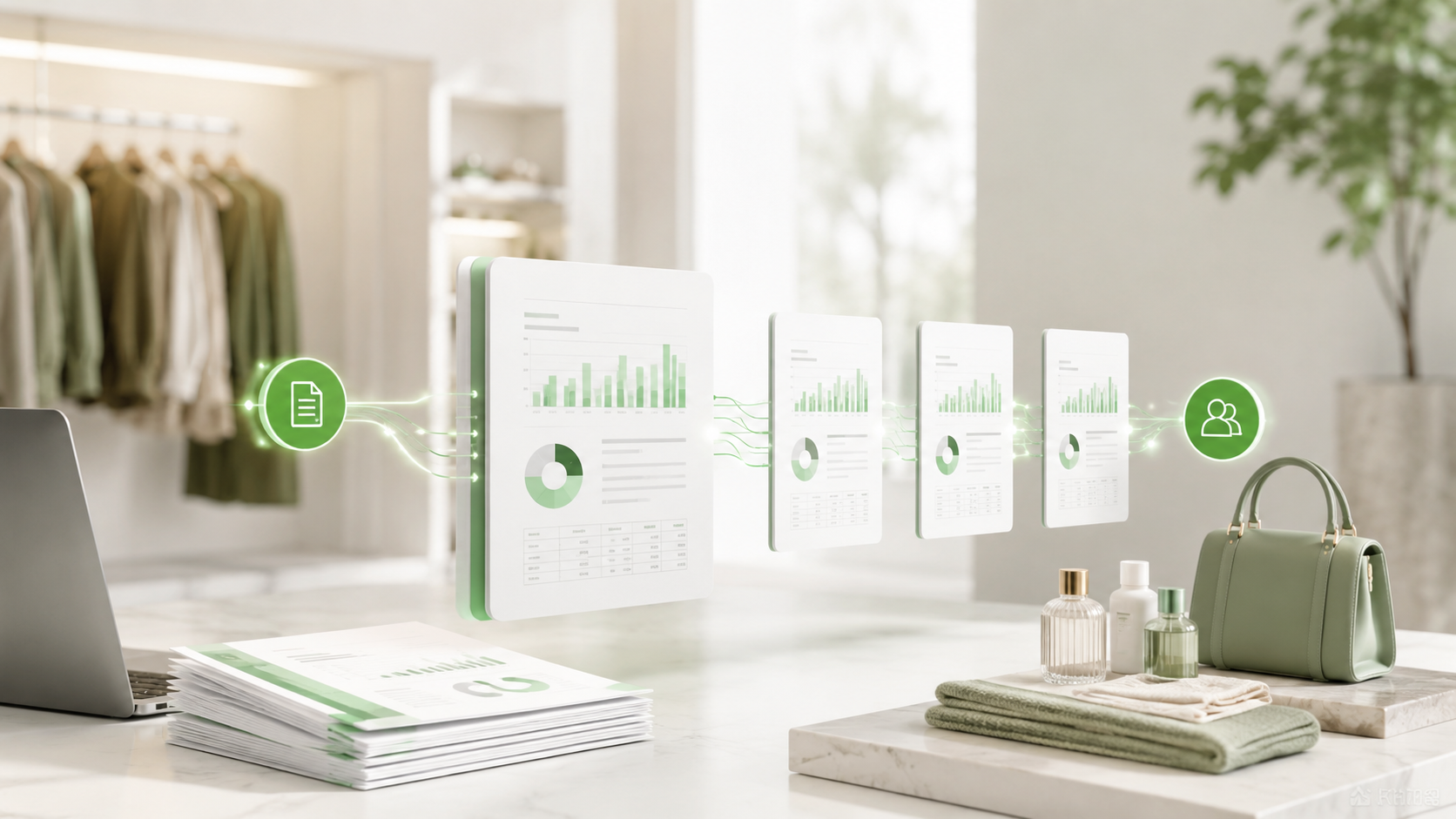
Vendor reporting is an essential part of retail collaboration. Brand partners need visibility into sales, inventory, product movement, and performance trends so they can support better decisions across replenishment, assortment, planning, and execution. But for many retailers, the process of delivering that information is still highly manual.
Retail teams may spend time pulling reports, exporting data, formatting spreadsheets, sending files, and responding to recurring vendor requests. As the vendor network grows, this process becomes harder to manage. What may have worked for a few key partners can quickly become inefficient across hundreds or thousands of vendors.
Automated vendor reporting helps retailers reduce this manual workload while giving vendors more consistent access to the data they need. Instead of relying on repeated file sharing and one-off reporting requests, retailers can create a scalable reporting process that supports better collaboration and stronger performance visibility.
What Is Automated Vendor Reporting?
Automated vendor reporting is the process of delivering sales, inventory, and performance data to vendor partners through a more streamlined and repeatable workflow. Rather than manually preparing and distributing reports, retailers can provide vendors with direct access to standardized reporting views or automatically updated insights.
The goal is not only to save time. It is to make vendor reporting more reliable, consistent, and useful. Vendors need data that is accurate and timely enough to support decisions. Retailers need a process that can scale without adding more administrative work to internal teams.
When vendor reporting is automated, both sides benefit. Vendors gain clearer visibility into performance, and retailers reduce the operational effort required to keep partners informed.
Why Manual Vendor Reporting Creates Operational Drag
Manual vendor reporting can create a significant burden for retail teams. Every report may require data extraction, formatting, checking, and distribution. If different vendors need differentviews or reporting cadences, the process becomes even more complex.
This type of workflow can slow down internal teams and create inconsistent vendor experiences. Some vendors may receive updates quickly, while others wait for manual responses. Some reportsmay include detailed information, while others may be more limited. Over time, this inconsistency can make collaboration harder.
Manual reporting also increases the risk of errors. When data is copied between systems or reformatted across spreadsheets, mistakes can happen. A mismatched time period, incorrect product mapping, or outdated file can affect the quality of vendor conversations and decisions.
For retailers, the cost of manual reporting is not just time. It is also lost efficiency, delayed collaboration, andlimited scalability.
Automated Reporting Gives Vendors More Consistent Access
One of the biggest benefits of automated vendor reporting is consistency. Vendors can access the same type of performance information through a structured reporting experience, rather thanrelying on different files, formats, or manual updates.
This consistency helps vendors understand what is happening with their products and where they may need to support the retailer. They can review sales trends, inventory levels, product movement, and performance changes more easily. They can also prepare for retailer conversations with better data and clearer recommendations.
For retailers, consistent reporting improves collaboration across the vendor network. Instead of managing reporting differently for each partner, teams can provide a more standardized experience that is easier to maintain and easier for vendors to use.
Reducing Back-and-Forth Requests
Without automated reporting, vendors often need to request updates from retailer teams. They may ask for recent sales performance, inventory position, store-level data, or product movement by time period. These requests can create ongoing back-and-forth that slows down both sides.
Automated vendor reporting reduces this friction by giving vendors access to the information they need without requiring a manual response every time. This frees internal teams from repetitive reporting tasks and allows conversations to focus on performance, strategy, and next steps.
When vendors can self-serve approved reporting and insights, they become more proactive. They can identify issues earlier, prepare better recommendations, and engage with retailer teams from amore informed position.
Improving Speed and Timeliness
In retail, timing matters. Delayed reporting can mean missed replenishment opportunities, growing stock issues, or slower responses to changing demand. Automated vendor reporting helps improve speed by making performance data available through a more reliable and repeatable process.
Vendors do not need to wait for a manually prepared report to understand what is happening. Retailers do not need to stop and create the same update repeatedly. Instead, the reporting process becomes more continuous and easier to trust.
Timelier access to data can support better decisions around replenishment, allocation, promotional planning, and assortment performance. It can also help both sides identify risks andopportunities while there is still time to act.
Maintaining Control While Scaling Access
Automation should not mean giving up control. Retailers still need to manage what data is shared, who can access it, and how information is distributed. A strong vendor reporting process should support secure access and permissions so that each vendor only sees relevant information.
This is especially important for retailers with large vendor networks. As more partners gain access to reporting, the process needs to remain controlled and scalable. Automated vendor reporting helps retailers expand visibility without relying on uncontrolled file sharing or manual distribution.
The right approach gives vendors better access while giving retailers confidence that data is being shared appropriately.
Turning Reporting Into Better Collaboration
Automated vendor reporting is most valuable when it improves collaboration, not just efficiency. When vendors have access to clear sales and inventory data, they can better support retailer objectives.They can help identify replenishment needs, understand product movement, flag potential risks, and contribute to more informed planning conversations.
Retailers also benefit from having better-prepared vendors. Instead of spending time explaining basic performance updates, teams can focus on decisions. What should be replenished? Which products need support? Where is inventory at risk? Which categories are showing momentum?
This moves vendor reporting from an administrative task to a collaboration tool.
How SKYPAD Supports Automated Vendor Reporting
SKYPAD helps retailers simplify and automate vendor reporting by providing a more centralized way to share sales and inventory insights with brand partners. Instead of relying on manual exports, repeated file sharing, or one-off reporting requests, retailers can give vendors access to a more consistent view of performance.
With SKYPAD, retailers can reduce manual reporting work while helping vendors understand product movement, inventory levels, and performance trends. This supports better communication and more actionable conversations across replenishment, assortment, and retail planning.
For retailers managing many vendor relationships, SKYPAD creates a more scalable approach to reporting. It helps standardize the reporting experience, reduce operational complexity, and strengthen vendor collaboration through better data visibility.
Final Thoughts
Automated vendor reporting helps retailers reduce manual work, improve reporting consistency, and provide brand partners with better access to the data they need. It replaces repetitive reporting workflows with a more scalable process that supports faster and more informed collaboration.
For retailers, this is both an efficiency opportunity and a relationship opportunity. By making vendor reporting easier, more secure, and more consistent, retailers can strengthen partnerships and help vendors become more proactive contributors to performance.
As retail data becomes more central to decision-making, automated vendor reporting will become an increasingly important foundation for modern vendor collaboration.
Ready to reduce manual vendor reporting and improve collaboration? Request a SKYPAD demo today.